
Your voice, reconstructed
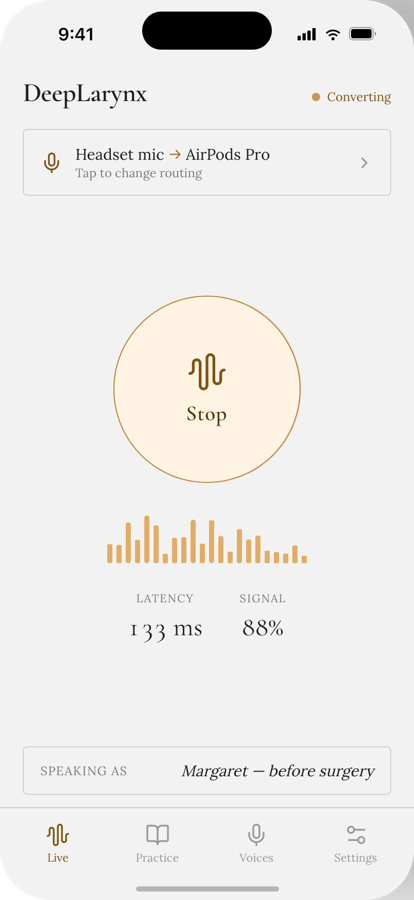
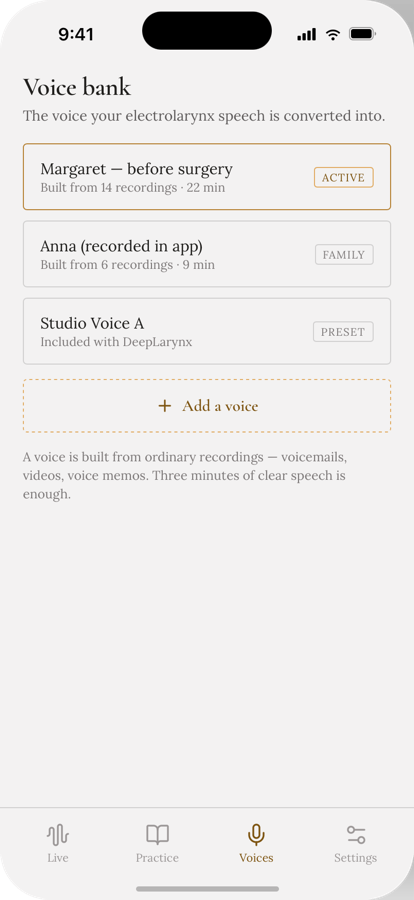
After a laryngectomy, an electrolarynx gives you speech — but not your voice. DeepLarynx listens to electrolarynx speech and re-creates natural speech as you talk, in a voice built from your own recordings, entirely on your device.


A population digital health forgot
An overlooked problem
Laryngectomy patients are a small patient population — too small for mainstream voice-tech to invest in. Decades after the electrolarynx was invented, its sound hasn't changed. That's exactly the kind of gap Replica exists to fill.
Built with our AI engine
The same rapid, AI-powered R&D process behind our diabetes work — rigorous benchmarking, streaming on-device models, fast iteration — let us go from research question to working voice reconstruction in months.
Private by design
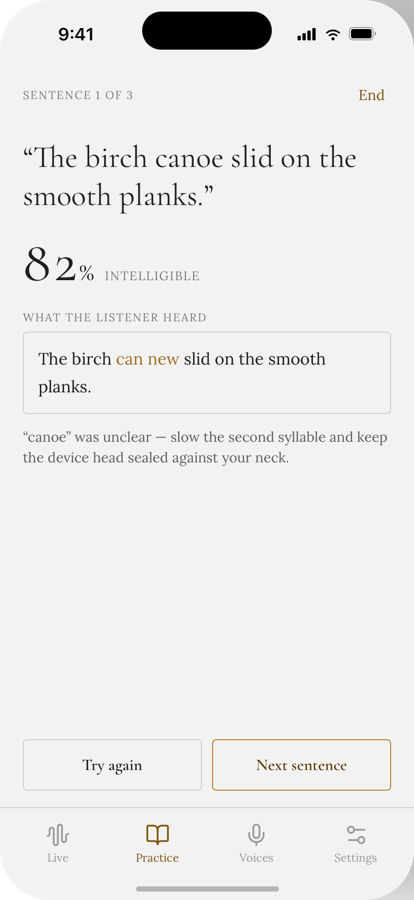
Live conversion runs entirely on your iPhone or Mac — no cloud round-trips, no audio uploaded, and it works with no connection at all. The one exception is Practice mode, which sends practice sentences to our servers to help train better models.
Natural speech in about a third of a second
A streaming neural pipeline listens to electrolarynx speech and re-synthesizes it as natural speech on the fly — reconstructing the speaker's own voice from a small set of reference recordings. It runs in real time on Apple silicon, with roughly a third of a second of delay.
On your phone, your Mac, your calls
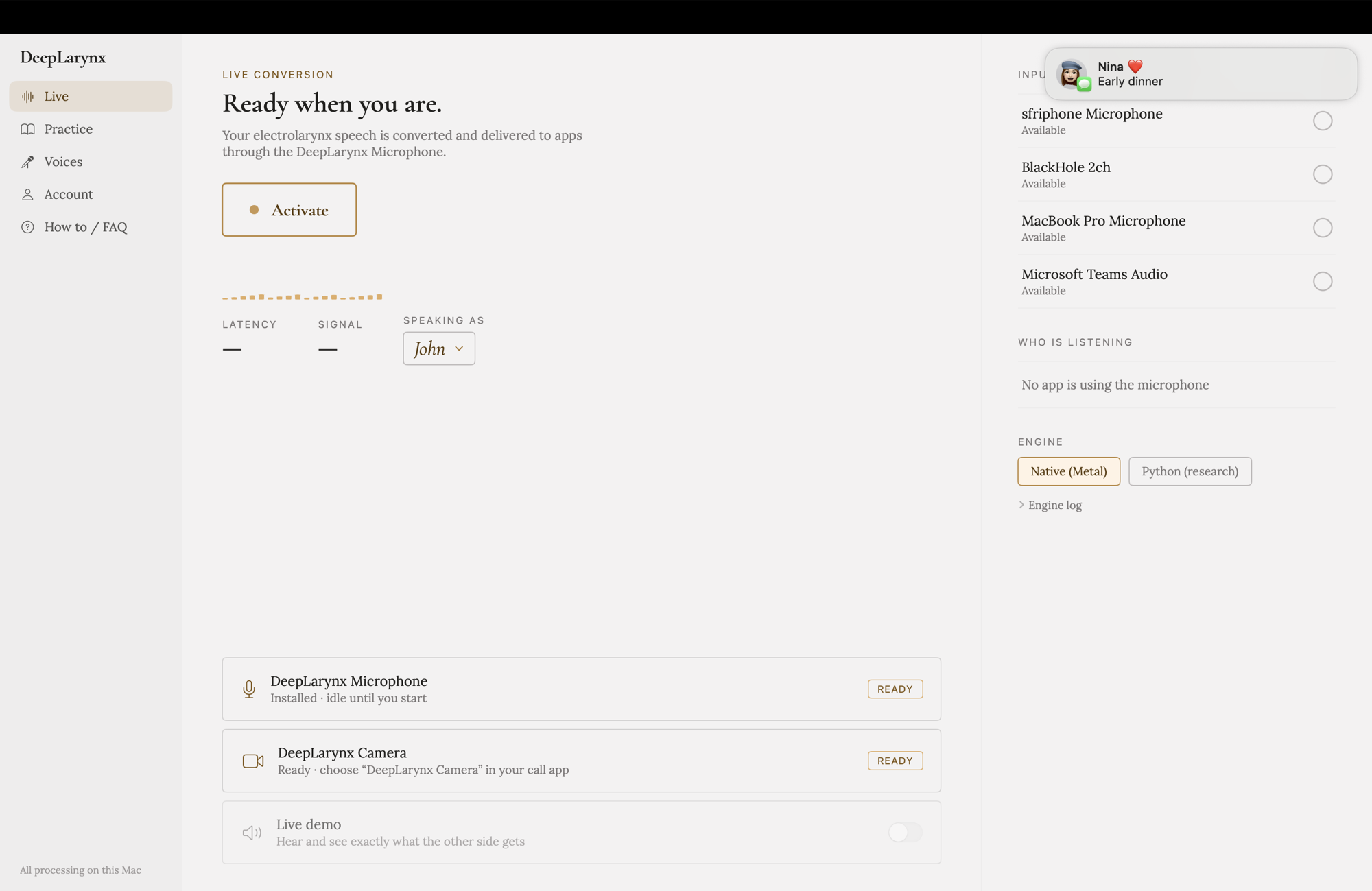
DeepLarynx is being built as native iOS and macOS apps — including a macOS virtual microphone, so your reconstructed voice works everywhere your regular microphone does: phone calls, FaceTime, Zoom, and beyond.
DeepLarynx is in active development.
If you're an electrolarynx user, a speech-language pathologist, or a clinician who wants to be involved in early testing — we'd love to hear from you.
Get in touch